How to Interview a Village Baker: Questions That Reveal a Local Bread's Story
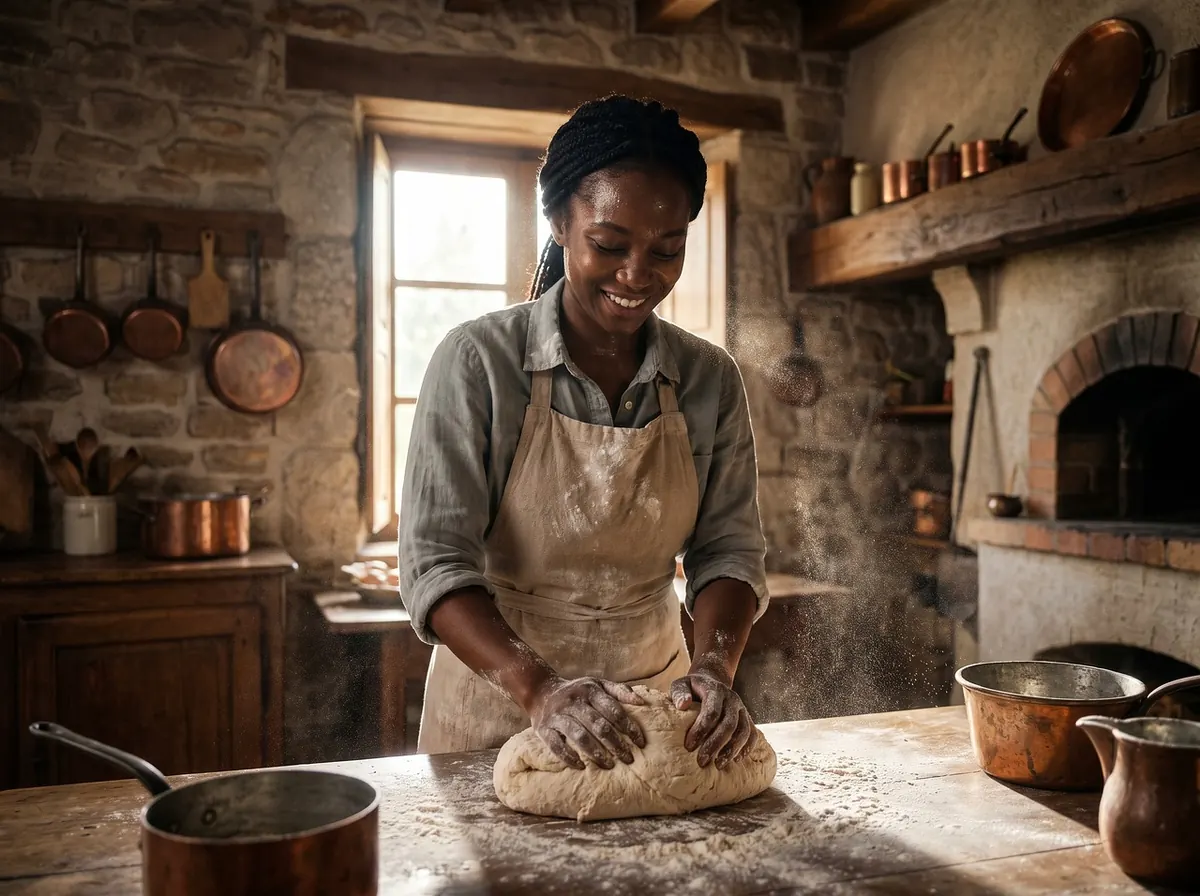
A baker will tell you almost anything if your hands are empty and your questions are specific. The trouble is that most interviews open with the wrong ones: what flour, what hydration, how long. Those are recipe questions, and a recipe is the least interesting thing in the shop. What you want is the story the bread carries — the oven someone's father built, the wheat that comes over from the next valley, the reason the Saturday loaves are shaped a little longer than the Tuesday ones.
That story arrives in pieces, usually while the baker is scraping a bench or sliding a peel into the mouth of the oven. The question set below is built for that rhythm. Ask it as a conversation, not a checklist, and write the answers down while they are still warm.
Before the First Question, Learn the Room
Visit once as a customer before you visit as an interviewer. Buy a loaf you would not normally buy, stand at the counter, listen to what the regulars say to each other. You will learn more in ten minutes of queueing than in a formal introduction, and you will have something concrete to ask about later.
While you are there, note the details that make good anchors for a profile:
- The names chalked on the shelf, and which loaves are already gone by nine.
- Whether the shop sells flour, biscuits and jars, or nothing but bread.
- Any framed photograph, faded label, or old wooden trough still in use.
- The pace of the place: when the queue forms, when the door goes quiet.
Then ask when a slow hour is, and turn up in it. Bring paper and a pen. A notebook invites pauses and half-sentences in a way that a phone held up between you does not, and bakers tend to talk more freely when they can see you are not recording them without saying so. If you want photographs, ask at the end, and ask about the oven and the bench rather than the person's face first.
Start With Time, Not Ingredients
Time is the safest door into a bakery and the most revealing. Ask what time the day started, who was in the building first, and what the shop feels like at three in the morning. Ask which bread goes into the oven first and why that one and not another. Ask whether they eat dinner at a normal hour, and whether the family ever sees them on a Sunday.
Answers about time carry technique inside them. A baker who says the dough is ready "when it holds the mark of a knuckle" is telling you about fermentation without using the word. One who says "I know by the smell when I open the door" is describing years of attention. Note the difference between what a baker claims about the schedule and what the bench actually shows — trays half-filled at seven, a second mix started at nine. The gap between the two is often the most honest paragraph in your piece.
Ask About the Moment It's Right, Not the Recipe
Recipe questions get guarded answers; sensation questions get real ones. Instead of asking for percentages, ask the baker to describe the dough at the exact moment they decide it is ready. What does it look like when it is pushed and springs back? What does it sound like when it is knocked out of the bowl? What does the room smell like when it has gone too far?
"Show me the shaping and tell me what your hands are checking for — not what you are doing, what you are feeling for."
That single request usually produces the best material of the morning. A baker who cannot explain a recipe in words can almost always narrate their hands. Follow it with the questions that separate a technician from someone who repeats a routine:
- What does a warm night do to your dough, and what do you change because of it?
- How do you know the oven is ready — what do you look at, listen for, or hold your hand against?
- Which step would you never skip, and what happens when you do?
- What has changed in the last five years, and was it your idea?
Failures are worth asking about directly: the batch that over-proofed on a hot afternoon, the new flour that drank more water than expected, the day the oven ran cold. People are modest about success and precise about mistakes, and precision is what a reader can use.
Family History: Follow the Names, Not the Dates
Never ask a baker to tell you the family history. You will get a list of years and a shrug. Ask instead: who taught you to shape? Whose recipe is this, and does it still carry that person's name in the shop? What did your mother do differently, and why did you stop doing it that way?
Objects work better than timelines. Whose photograph is that above the till? Where did the wooden peel come from? Is there a bowl, a cloth, a mould that predates everyone currently working? Ask what was kept and what was quietly dropped, and ask whether they miss the thing they dropped. The answer is rarely sentimental and almost always interesting.
Grain, Mill, and the Field Beyond the Wall
Local grain traditions are the easiest part of a profile to get wrong, because memory is patchy and everyone has a version. Ask where the flour comes from, whether the miller has a name, and whether they are using one farm or a blend. Ask what grows nearby and whether any of it reaches the bakery. Ask if there is a bread made only at harvest, or only for a particular feast.
Then listen carefully to how the answer is framed. "We always used this wheat" can mean three generations, or it can mean since the supplier changed two years ago. Record who said it and how certain they sounded, and write "she remembers" rather than "the village has always". A well-placed hedge protects your credibility and makes a better sentence anyway.
Follow the Odd Word, Then Ask Who Else Bakes
Every bakery has vocabulary you will not find in a bread book: a local name for the scoring, the end slice, the starter, the second rising. When you hear one, stop and ask them to spell it, explain it, and say who else uses it. These words are the texture of a place, and they are usually the first thing to disappear when a bakery closes.
Before you leave, ask who else bakes in the area, who taught them something outside the family, and what the oldest customers ask for that nobody younger wants. Ask what the children buy. Bakers see their town through the counter, and their answers will give your profile a wider map than one shop.
Turning a Morning of Talk Into a Profile
- Write up your notes the same day, while you can still hear the voice saying them.
- Pick one technique and one person to build the piece around. Two strong details beat twelve thin ones.
- Keep the baker's own phrasing for anything sensory; paraphrase only the facts.
- Read the draft back to them, or send it, and correct anything you got wrong about the family or the mill.
- Mark what you are unsure of in your own notes, and leave it out rather than guessing.
Then go back and buy a loaf. It is the least a good interview deserves, and it gives you one more chance to notice what you missed the first time.
Photo: erwinbosman / Pixabay