Beginner's Guide to Regional Bread Shapes: 12 Loaves to Know
A loaf can tell you where it was born before you tear into it. A tall dome with a cross cut into the top points to a wood-fired oven and hard durum wheat; a sheet so thin it crackles when you fold it points to a place where bread had to keep for months. Shaping is a handful of quiet decisions — how tightly you roll, where the blade goes, what the dough sits on — and once a region finds a form that suits its flour, fuel and table, it tends to keep it. Twelve shapes follow, and the reasoning behind each one.
Why Shape Is Never Just Decoration
Almost every regional form answers one of four pressures.
- The oven. A wide flat hearth, a domed wood oven, a vertical clay tandoor, a lidded pan. Each decides where the heat comes from, and therefore which way the dough is allowed to grow.
- The flour. Rye and other weak, sticky doughs will not hold a tall free-form loaf, so they end up in pans or rolled flat. Strong durum and bread wheat will hold a dome.
- Keeping. Thin bread dries instead of moulding and can be stored for months. Big, thick-crusted loaves hold their moisture for days.
- The table. Shapes meant to be broken by hand — four horns, a pocket, a ladder of cuts — are built around the way the bread gets shared.
Scoring sits on top of all four. A cut is a controlled rupture: it gives the expanding dough a place to open, so the loaf bursts where the baker intended instead of wherever the crust happens to be weakest.
Italy: Hard Wheat, Hot Ovens, Big Loaves
Pane di Altamura. A tall, heavy loaf of durum semolina and natural leaven, often close to a kilo, with a domed top that pushes up like a hat as it bakes. A cross is scored into that dome, and the height is exactly why: a loaf this tall needs somewhere to release, or the crust tears where it likes. The yellow crumb stays good for days.
Pane Carasau. Sardinian bakers roll durum dough into a disc the thickness of a few sheets of paper and bake it so fast that it puffs into two layers. The layers are separated and the halves go back into the oven to crisp. No score, no crust in the usual sense: the shape is a preservation method. Stacked rounds keep for months.
Coppia Ferrarese. Lard, olive oil and a twist. Two strands are rolled, crossed and pinched so the finished loaf shows four pointed horns and a split along the middle. The crust stays crisp and the crumb is built for dipping into sauce. In Ferrara it is broken, not sliced.
Pane Toscano. Saltless, and quietly proud of it. The round or oval loaf is cut deeply and baked dark; without salt the crumb tastes flat on its own and comes alive under prosciutto or pecorino. The story usually told is an old salt tax, and the history is messier than the legend, but the wide, low, generously slashed shape is unmistakably Tuscan.
France: The Slash, the Steam and the Hearth
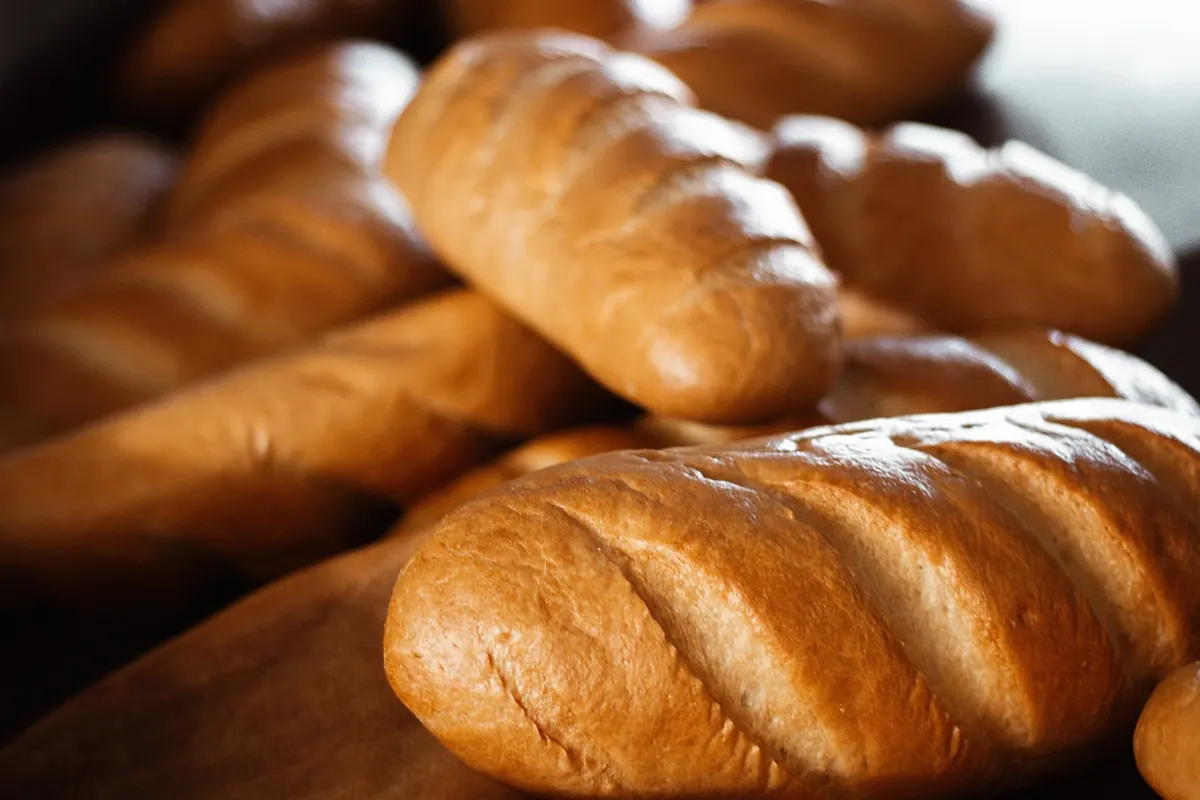
Baguette. The long loaf is a crust-delivery system: a slim cylinder gives more crust per crumb than almost any other form. Five to seven overlapping diagonal cuts, made at a shallow angle, open into the raised "ears" along the top. Steam in the first minutes of baking keeps the surface soft long enough to expand before it sets.
Fougasse. A flat olive-oil dough from Provence, cut right through in a pattern that opens into holes and leaves the loaf looking like a wheat ear or a ladder. Those cuts are structural, not decorative: they let a low-tension dough bake evenly and produce plenty of crisp edge. Olives, anchovies, orange peel — all welcome.
Miche. The big country round, often a wheat and rye blend, often a kilo or more, long fermented and baked on the hearth. A cross or a single long cut divides the dome into sections that open at the same rate. Size is a keeping strategy: a miche is still worth eating on day four.
Northern Europe: Rye, Lye and Patience
Pumpernickel. Westphalian wholemeal rye, sourdough and time. The dough is too weak to stand on its own, so it goes into a lidded pan and bakes for many hours at low heat, traditionally overnight, until it turns almost black and sweet. The rectangular block is not a style choice; it is what the dough allows.
Brezel. A strand rolled with a thick middle and thin tapered ends, knotted, dipped in lye and sprinkled with coarse salt. The lye sets the surface quickly, so the deep slit across the belly bursts into that familiar thick lip while the slim arms stay slim. Every part of the shape is a decision about how the dough will set.
Flatbreads and Fire: From the Levant to the Tandoor
Pita. Round, rolled to an even thickness and baked on a very hot stone or the wall of a taboon. The pocket is steam: the outer surfaces set while the middle is still wet, and the steam pushes them apart. There are no cuts at all. Roll it unevenly or bake it too cool and you get a flat disc instead.
Lavash. Rolled as thin as the baker dares, stretched over a cushion and slapped onto the wall of a tonir or onto a hot saj. It blisters and crackles, stays pliable enough to wrap, and dries into brittle sheets that keep for months. Thinness is the whole architecture.
Naan. Stretched and slapped onto the vertical wall of a tandoor. The dough hangs there, so gravity and heat pull it into a teardrop with a charred, blistered face and no score whatsoever. This is a shape that could only exist on a wall.
How to Read a Loaf's Shape
Next time you stand in front of a bakery counter, look at the loaf rather than the label and ask:
- Where are the cuts, and do they run along the loaf or across it?
- Are they deep — roughly a centimetre or more — or only a scratch on the surface?
- Was the dough free-formed, or was it held by a pan, a couche or a wall?
- Which side is darkest, and where was the heat coming from?
- Is the loaf thin because it was meant to keep, or thick because it was meant to last the week?
Taking the Map Into Your Own Kitchen
Pick one dough you already know — a simple white at around 70 per cent hydration, or a half-rye — and shape it three ways in a single session: a tight round with a cross, a long roll with overlapping diagonal cuts, a flat disc with the top cut through. Bake them together and taste the difference. Those differences are what the twelve loaves above are built on.
Two habits help. Score cold dough straight from the fridge; it drags less and the blade goes where you intend. And keep notes: hydration, proof time, where you cut, how the loaf opened. Within a month that notebook will tell you more about your own oven than any recipe can.
The shapes here are not costumes to copy exactly. They are answers, worked out over generations, to the questions your kitchen is already asking.
Photo: silviarita / Pixabay